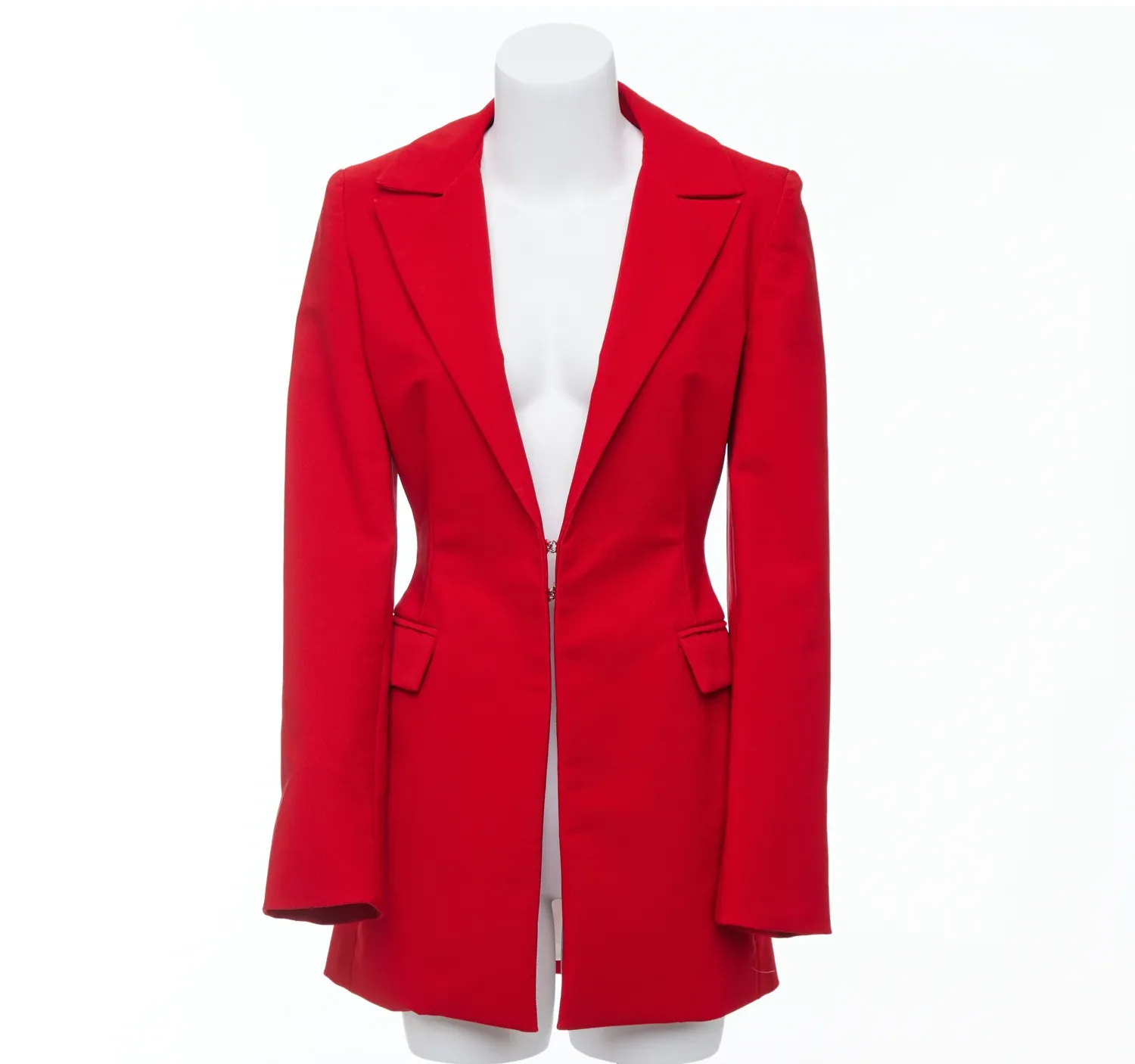
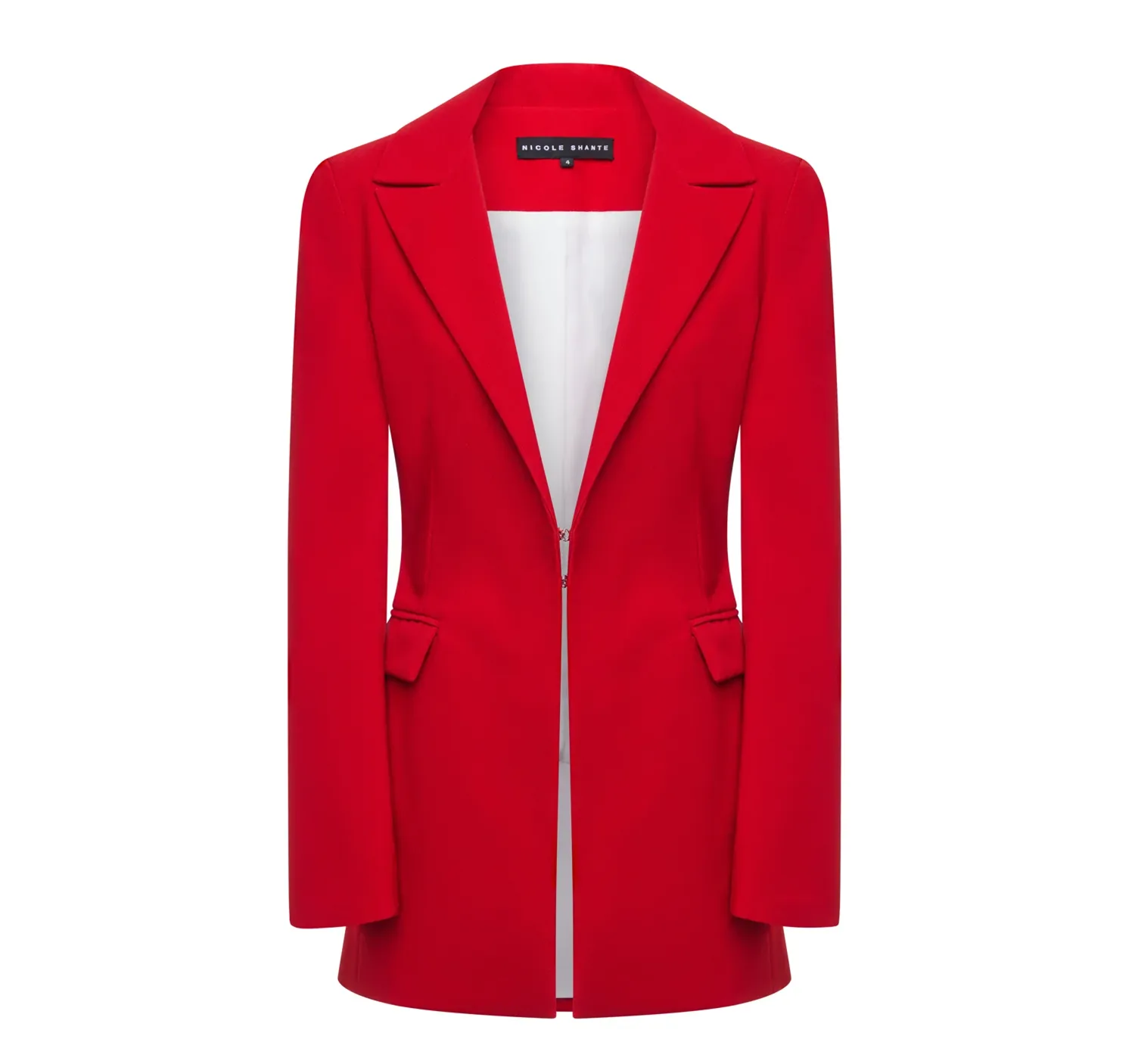
Red Blazer
Ghost mannequin edit — mannequin removed, inner label composited for a clean 3D form.
GHOST MANNEQUIN
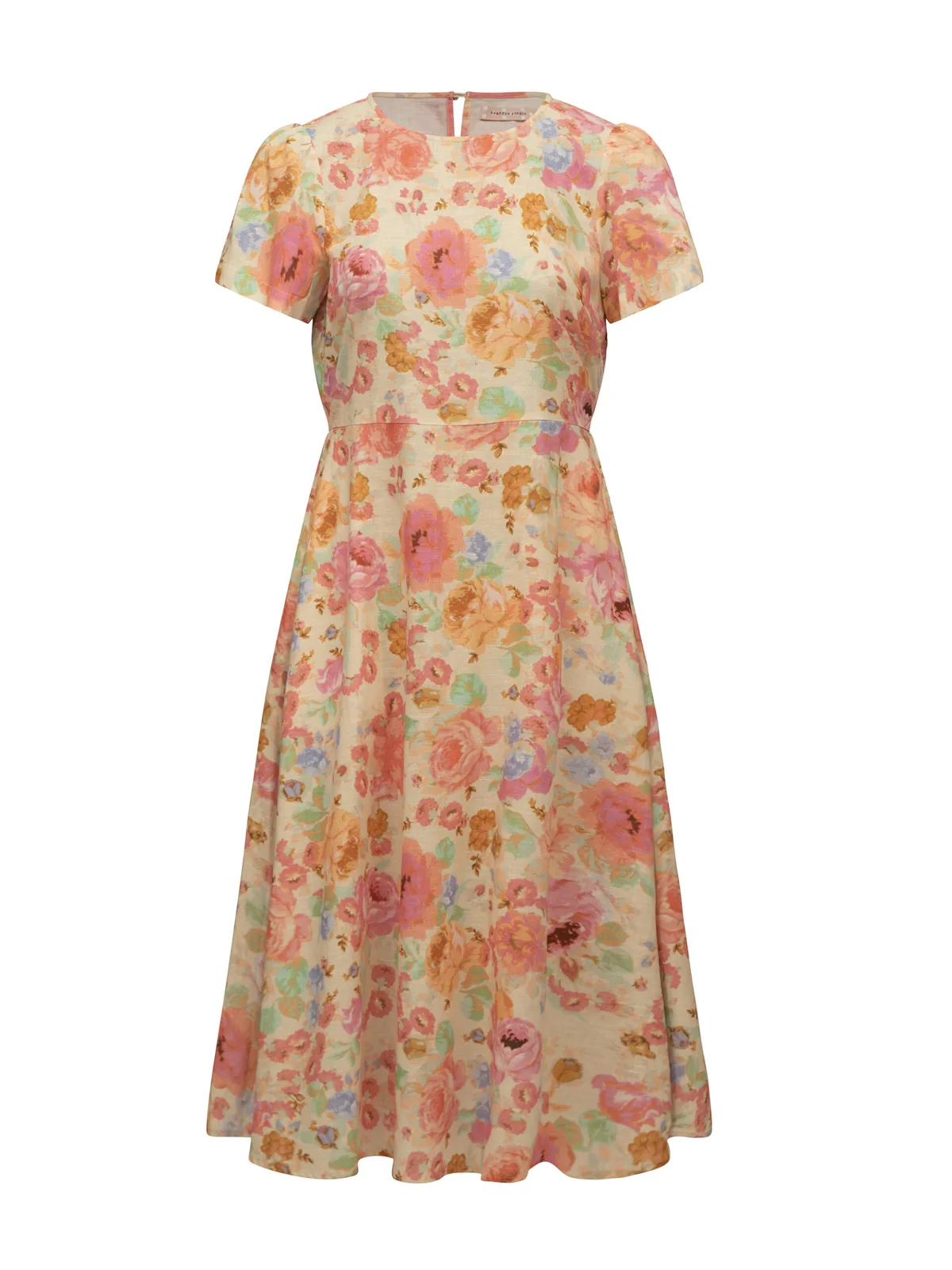
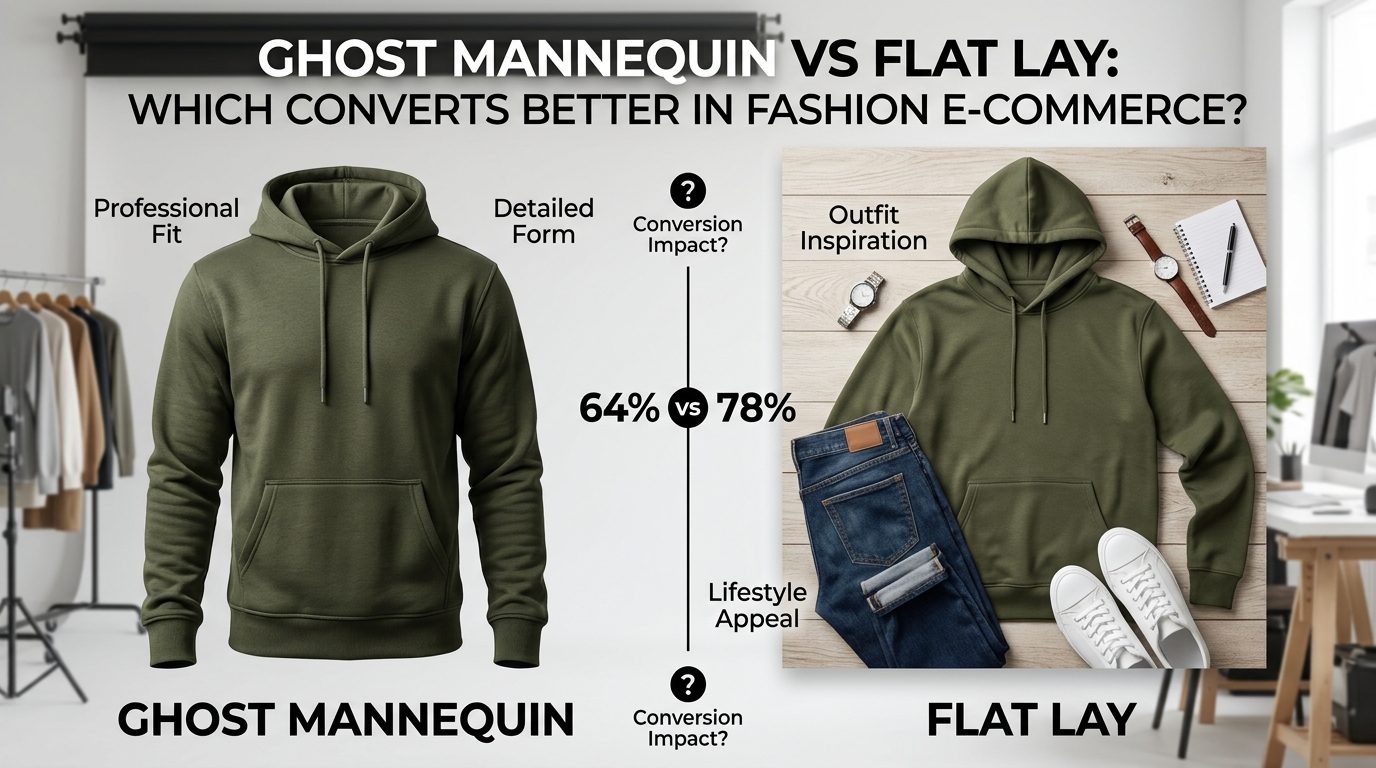
Every apparel brand faces the same catalogue question: show the garment on a person, or let the garment hold its own shape with the ghost mannequin effect? Both formats sell millions of garments a year, but they do different jobs. This comparison breaks down where each one wins — cost, consistency, fit information, returns and brand feel — and how most mature catalogues end up using the two together.
On-model photography sells the feeling of a garment — drape in motion, styling, identity. Ghost mannequin photography sells the garment itself — its cut, construction and details, presented identically across hundreds of products. Shoppers use model shots to imagine themselves in the piece and ghost mannequin shots to inspect what they are actually buying. Removing either one from a product page removes information the other cannot fully replace.
Ghost mannequin: Low and predictable — one setup repeats across the whole catalogue; editing runs $3–$10 per image.
On-model: High — casting, model fees, styling, location and a new shoot for every drop.
Ghost mannequin: Identical angle, form and background across thousands of SKUs and seasons.
On-model: Varies with every model, session and location; harder to keep uniform.
Ghost mannequin: Shows true shape and proportions without a body's variation.
On-model: Shows drape, stretch and movement on a real body — the strongest fit signal.
Ghost mannequin: Excellent — construction, lining, labels and texture are the whole frame.
On-model: Good, but details compete with styling and pose.
Ghost mannequin: Neutral and product-led; the catalogue itself carries the brand.
On-model: Strong — casting and styling express the brand's world.
Ghost mannequin: Fast — garments can be shot and edited within days, no scheduling around models.
On-model: Slower — depends on casting, shoot days and retouching.
Ghost mannequin: Product pages, category grids, marketplaces, large catalogues.
On-model: Campaigns, lookbooks, hero products, fit-critical pieces.
A body shows how fabric falls, stretches and moves — information a static form can only suggest. For tailored, fluid or deliberately oversized pieces, a model shot often answers the shopper's real question ('how will this sit on me?') faster than any product-only image.
Models carry the brand's world: casting, setting and styling signal who the garment is for. Campaigns, lookbooks and collection launches are built on that signal, and no product-only format replaces it.
Every ghost mannequin image is shot and edited the same way — same angle, same form, same background — so grids, category pages and marketplaces look uniform across thousands of SKUs and multiple seasons. Model shoots drift with every session, model and location.
There is no casting, no model fees, no reshoot when a model changes. A garment is steamed, mounted, photographed and edited — and the same workflow covers a 20-piece drop or a 2,000-piece catalogue. That is why high-volume sellers anchor their product pages on ghost mannequin images and reserve model budgets for heroes and campaigns.
With nothing competing for attention, shoppers zoom into construction: stitching, lining, fastenings, fabric texture. The insert compositing that defines the technique — explained in our step-by-step Photoshop tutorial — shows the inside of the garment too, which flat product shots never do.
Fit uncertainty drives a large share of apparel returns, and imagery is one of the few levers a product page controls. Model shots help by showing the garment on a real body (stronger still when the model's size and measurements are stated). Ghost mannequin images help differently: by presenting shape and proportions without a body's variation, and by making construction details inspectable before purchase. Brands that publish both — model for context, ghost for inspection — give shoppers the two views they toggle between before deciding.
Strip both formats down to their per-product cost. A model shoot divides a day rate for the model, photographer, stylist and studio across the garments completed that day — efficient at volume, expensive for a five-piece drop, and the cost returns in full for every new collection. Ghost mannequin divides a simpler shoot (no casting, no styling team, faster garment changes) plus editing at a published per-image rate — Pic Visual's is $3–$10 depending on join complexity — across the same products.
The structural difference matters more than any single figure: model costs are dominated by the shoot day, so they scale with how often you shoot; ghost mannequin costs are dominated by editing, so they scale with how many products you publish. Brands publishing hundreds of SKUs per season feel the second model far less than the first — which is why high-volume catalogues default to ghost coverage and spend their model budget where it buys the most: hero products and campaigns.
Drag across each example to compare the original mannequin photograph with the finished image — real Pic Visual production work from our portfolio.
Red Blazer
Ghost mannequin edit — mannequin removed, inner label composited for a clean 3D form.
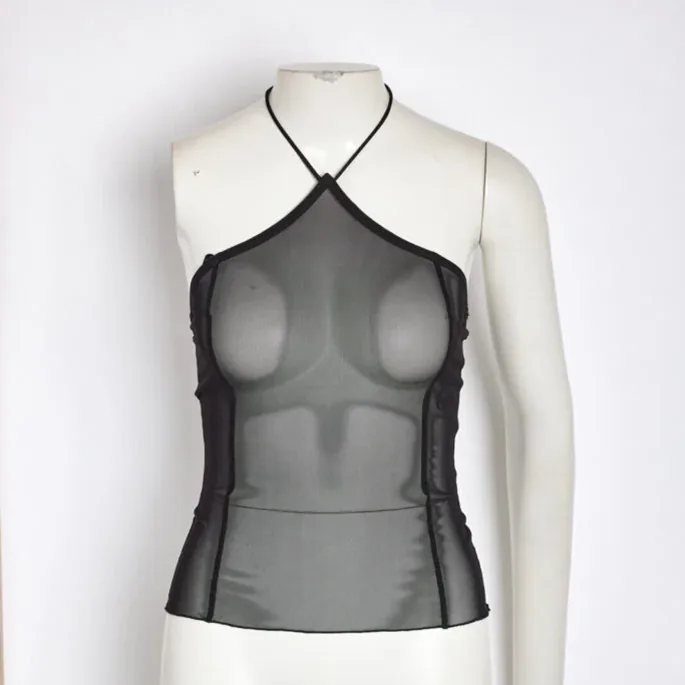
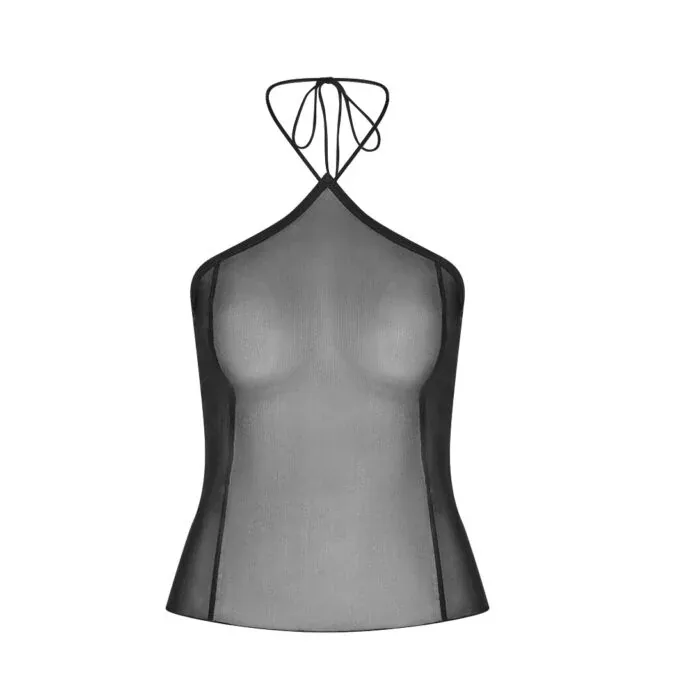
Black Halter Top
Neck-joint compositing keeps the straps and neckline exactly in place.
The pattern we see across established apparel catalogues: ghost mannequin as the consistent product-page backbone (front, back and detail views), one on-model shot per product for fit context, and full editorial model photography reserved for campaigns. If you already shoot on models, adding ghost mannequin coverage is an editing decision more than a photography one — the garments are photographed on a mannequin in the same session, and the effect is created in post-production. Our ghost mannequin service handles that post-production at $3–$10 per image; if you shoot the inserts yourself, this preparation guide lists exactly what to capture.
Neither wins universally — they answer different shopper questions. Model images drive desire and fit confidence; ghost mannequin images drive inspection and catalogue consistency. Product pages that combine both give shoppers desire plus detail, which is why most large apparel catalogues use the hybrid model rather than choosing one.
Per SKU, yes, substantially. Ghost mannequin removes casting, model fees, styling teams and location costs, and the same setup repeats across every product. Model photography costs more per garment but returns brand and campaign value ghost mannequin cannot provide.
They can help on the detail side: shoppers see construction, lining and true shape before buying, which prevents 'not what I expected' returns. Fit-related returns are better addressed by model shots with stated model measurements and good size guides — the formats complement each other.
You need mannequin photography of the garments — a model shot cannot be converted into a true ghost mannequin image, because the inside of the garment was never photographed. Most brands add a mannequin pass to their next shoot and build coverage season by season.
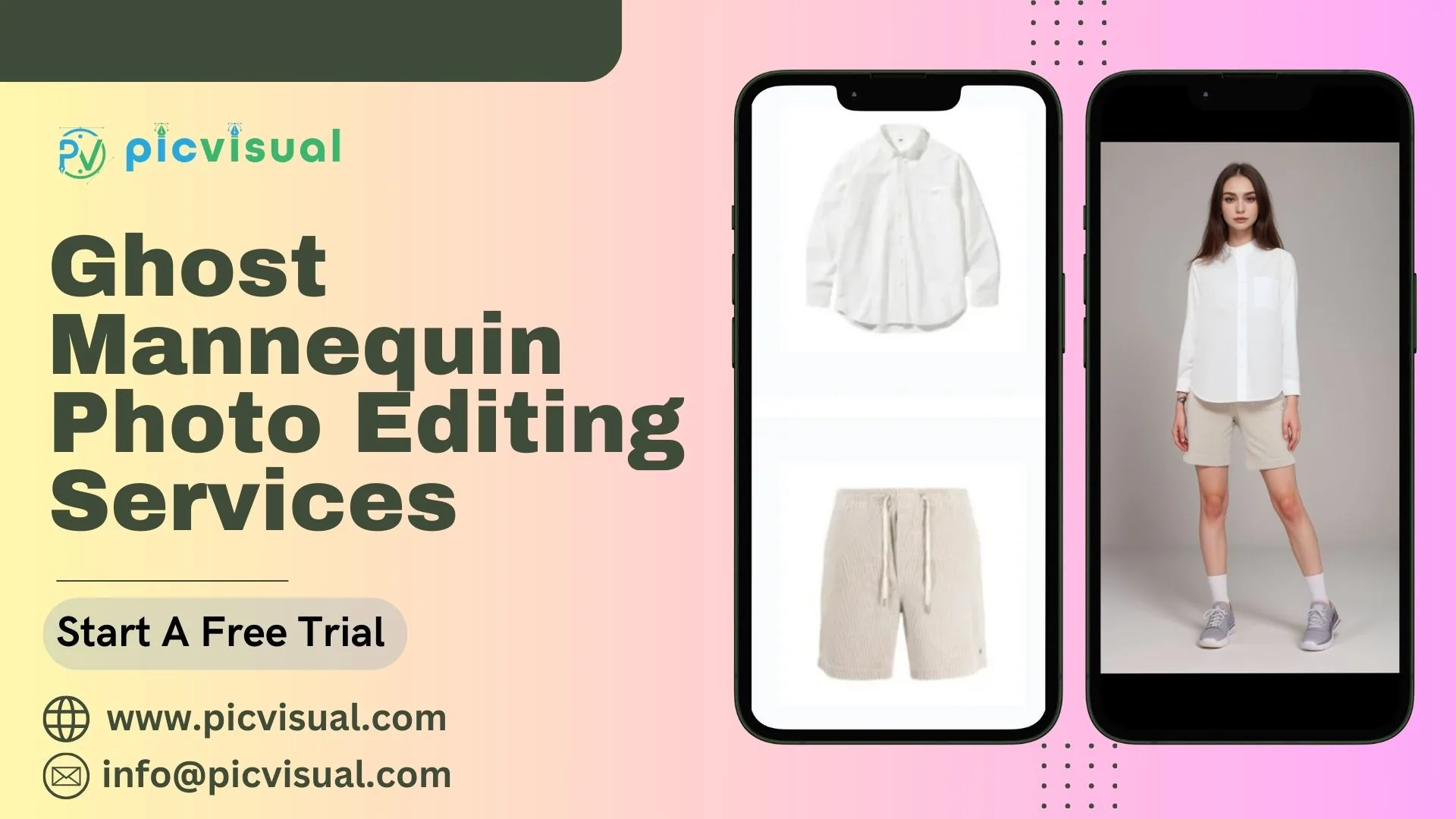
Need it done for your catalog? Pic Visual’s ghost mannequin service delivers hand-finished, catalog-ready images at $3–$10 per image with 24-hour delivery — or start with a free trial of up to 5 images and judge the finish on your own products. See also our dedicated neck joint service page for joint types, pricing and FAQs.